
When decay affects the chewing surface of a molar, a filling may be insufficient to restore the tooth.
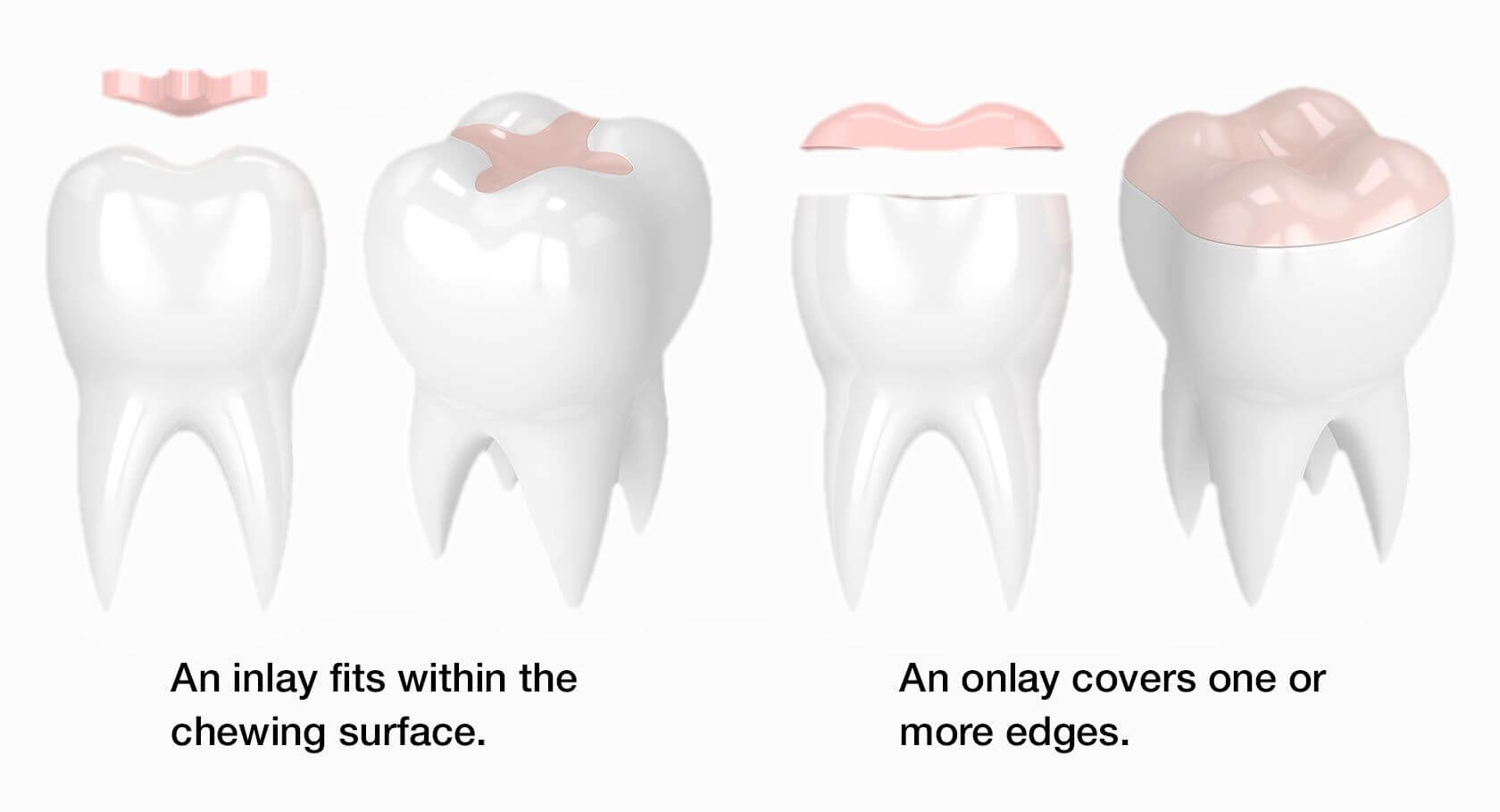
If the damage is not extensive enough to warrant a crown, an inlay or onlay may be the best solution.
What makes these restorations special?
Durable Protection
FOR DAMAGED TEETH
Relieve Discomfort and Restore Health
Decay can make teeth extra sensitive and eventually lead to tooth loss. An inlay or onlay can repair the tooth, alleviating sensitivity and preventing further decay.
More Conservative than Crowns
Crowns require your dentist to remove a significant portion of the tooth to accommodate the restoration. As an intermediate step between fillings and crowns, an inlay or onlay requires only a small amount of enamel removal.
Beautiful, Natural-Looking Results
Inlays and onlays are typically made of medical-grade porcelain, which can be shade-matched to blend seamlessly into your smile. Porcelain mimics the sheen of natural enamel and can strengthen a molar by up to 75 percent.
When will a dentist recommend an inlay or onlay?

Having Tooth Decay Is
NOTHING TO BE ASHAMED OF

Will Insurance Cover
AN INLAY OR ONLAY?
During the Procedure, Your Dentist Will...
Your dentist will simply remove any compromised tissue before placing the restoration.
Numb the Tooth
Administer a local anesthetic to numb the area for a more comfortable experience
Clear Out Decay
Remove compromised tissue to eliminate all damaged areas and bacteria
Clean the Area
Thoroughly clean and dry the tooth to ensure that no bacteria are trapped underneath the restoration
Take Impressions
Take impressions of the tooth, which will serve as the basis of the customized restoration
Revise Fit
Check the fit of the restoration to ensure your bite is balanced and comfortable
Attach Restoration
Bond the inlay or onlay to your tooth, restoring function and aesthetics